


Bidesh Beacon
DESCRIPTION
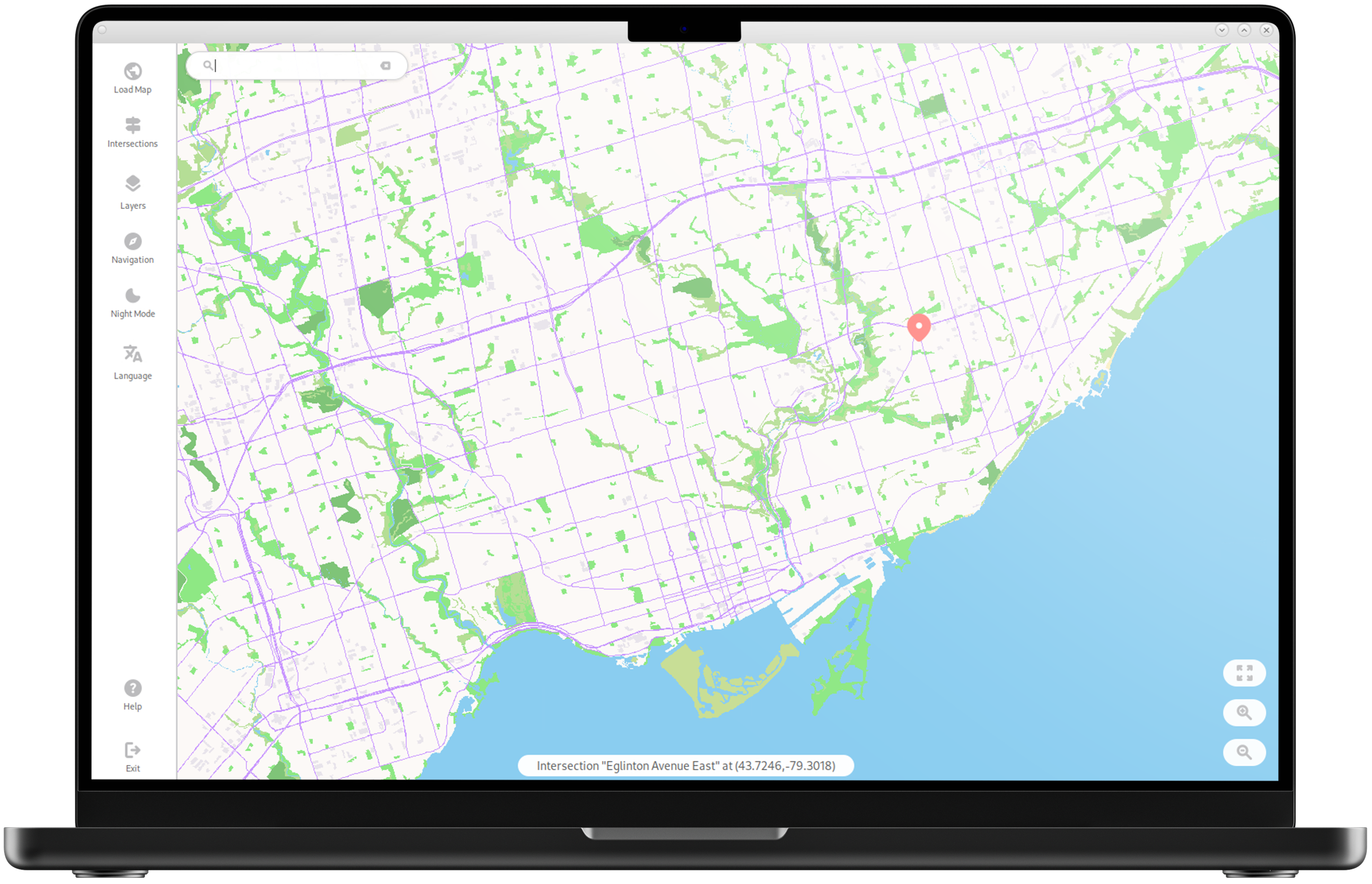
Bidesh Beacon is a map application designed to assist South Asian newcomers with finding resources and utilities to help them settle in a new city. Bidesh is the word for 'foreign country' in many South Asian languages, and Beacon is an allusion to one of the integral features of the software - tailored location markers that newcomers may find useful. For example, the locations of bilingual health services or South Asian grocery stores are among the different types of locations we curated for our users. The use of a non-English word also alludes to another important feature, which is the bilingual UI support. Other features include switching between different cities' maps, finding a route between two locations, and switching the UI to night mode.
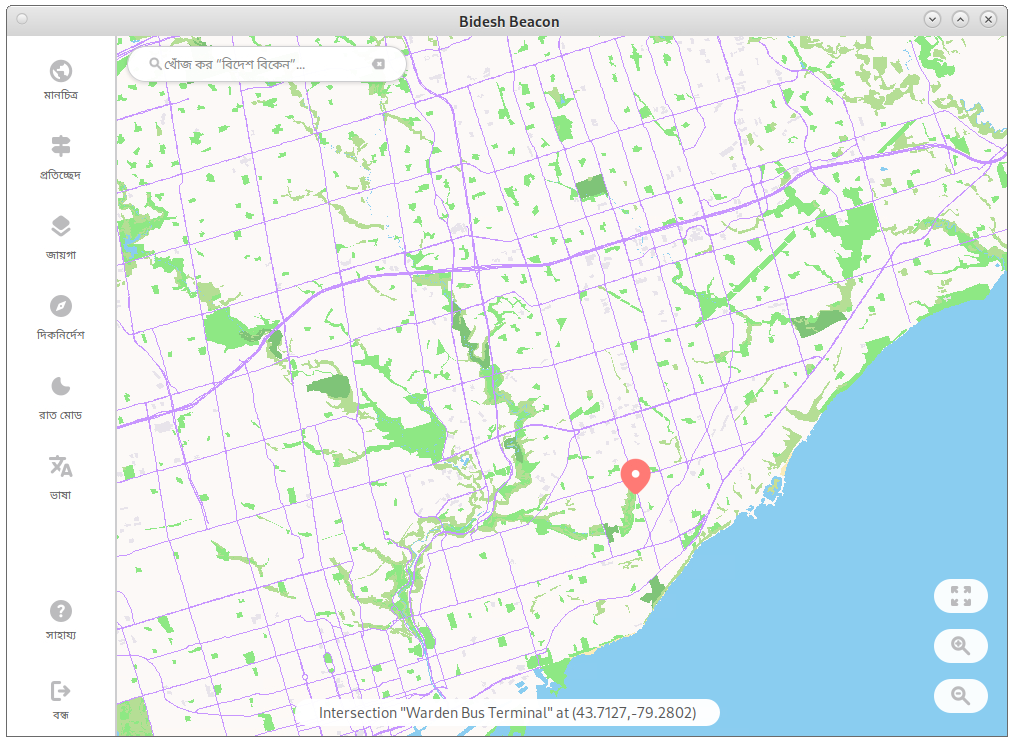
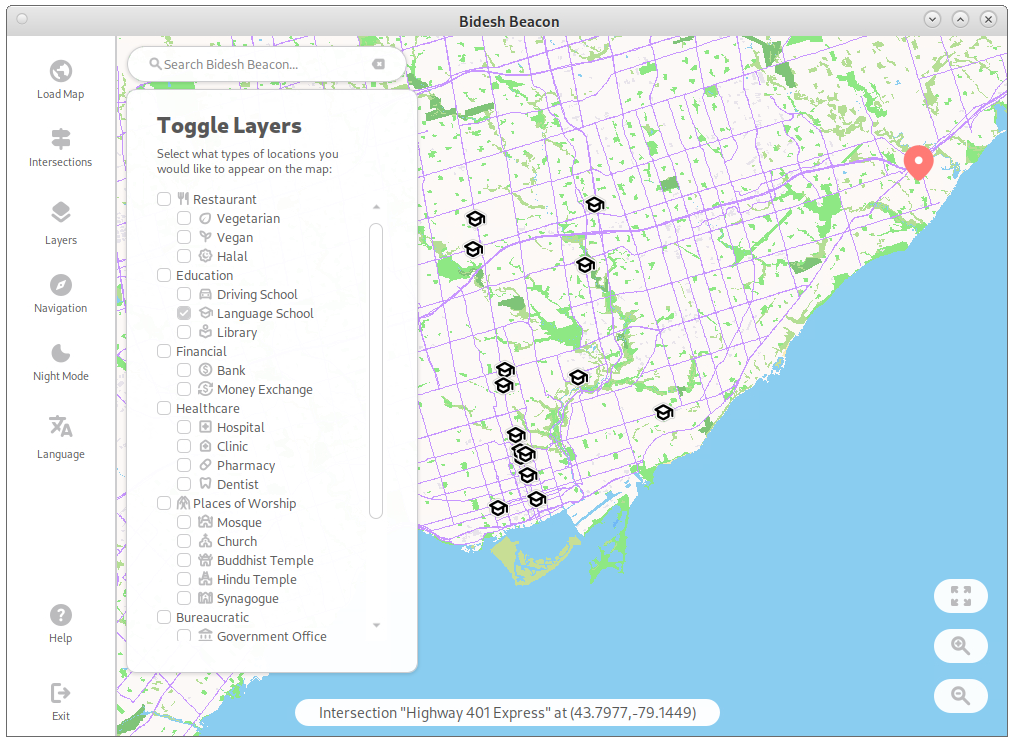
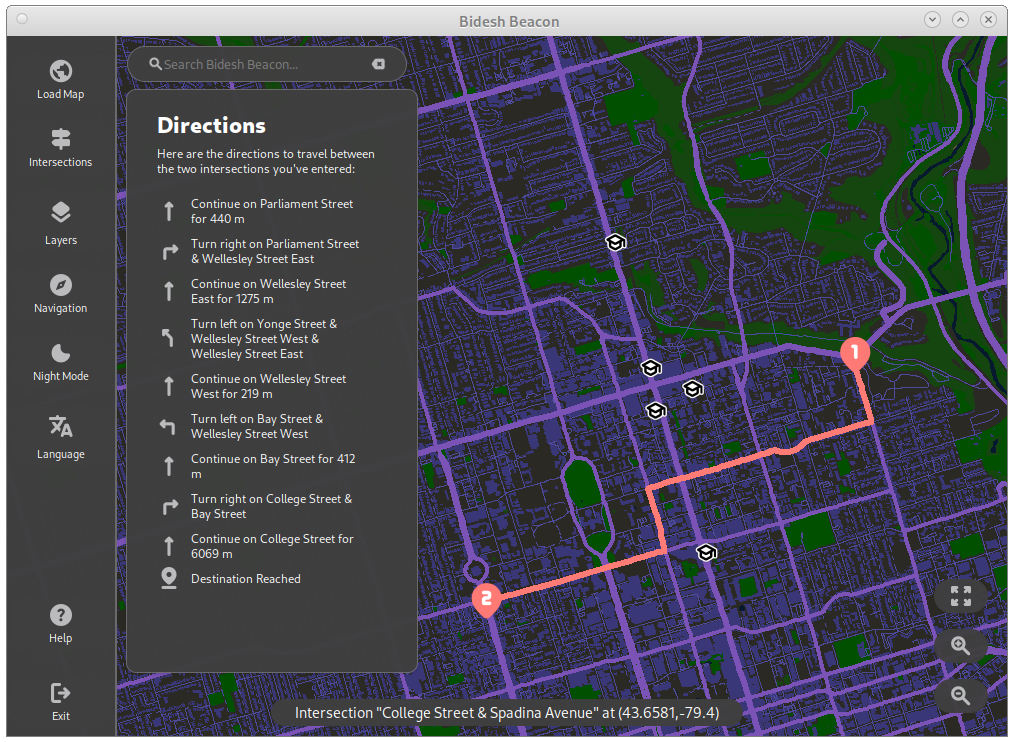
The application was written in C++, using the GTK library for the user interface, and the OpenStreetMap database for the map data. To retrieve the data more efficiently, we developed a higher-level API which pre-loaded and categorized information tailored to the map's features. For the navigation, we used Djikstra's Algorithm to find shortest paths between two points, taking into account speed limits.
As a team of South Asian developers who were once newcomers ourselves, we understood the unique challenges immigrants face when navigating a new city. The initial prototype we designed was based on the concept of creating a tool that our families would have benefited from when we were newcomers to the city. To further develop the design, we conducted informal research by consulting South Asian newcomers in our community. We also invited them to test the application, which helped us make improvements to the UI and ensure it was intuitive and accessible.
This project was created for the UofT Software Design course ECE297, in which we had several technical requirements and tight deadlines to present different stages of the project to our instructors. It was challenging to implement all the features we envisioned due to our time constraints, and some had to be scrapped, and others modified. We evaluated what the most important features were based on input from community members and our instructors, and focused on creating a minimum viable product. For example, due to difficulty finding translators under short notice, we decided to support just 3 major South Asian languages for our initial product. However, the underlying framework is there for us to expand the service in the future.
Although the product has room for improvement, I believe what we achieved in the time frame we were given shows our passion and commitment towards our mission and our community.
Back to Top
TAGS
C++
STL
OSM Database
GTK Library
Dijkstra's Algorithm
Travelling Salesman Problem
UI/UX Design
2025 © Nusaiba Rakhshan