


Snacktime Slider
DESCRIPTION
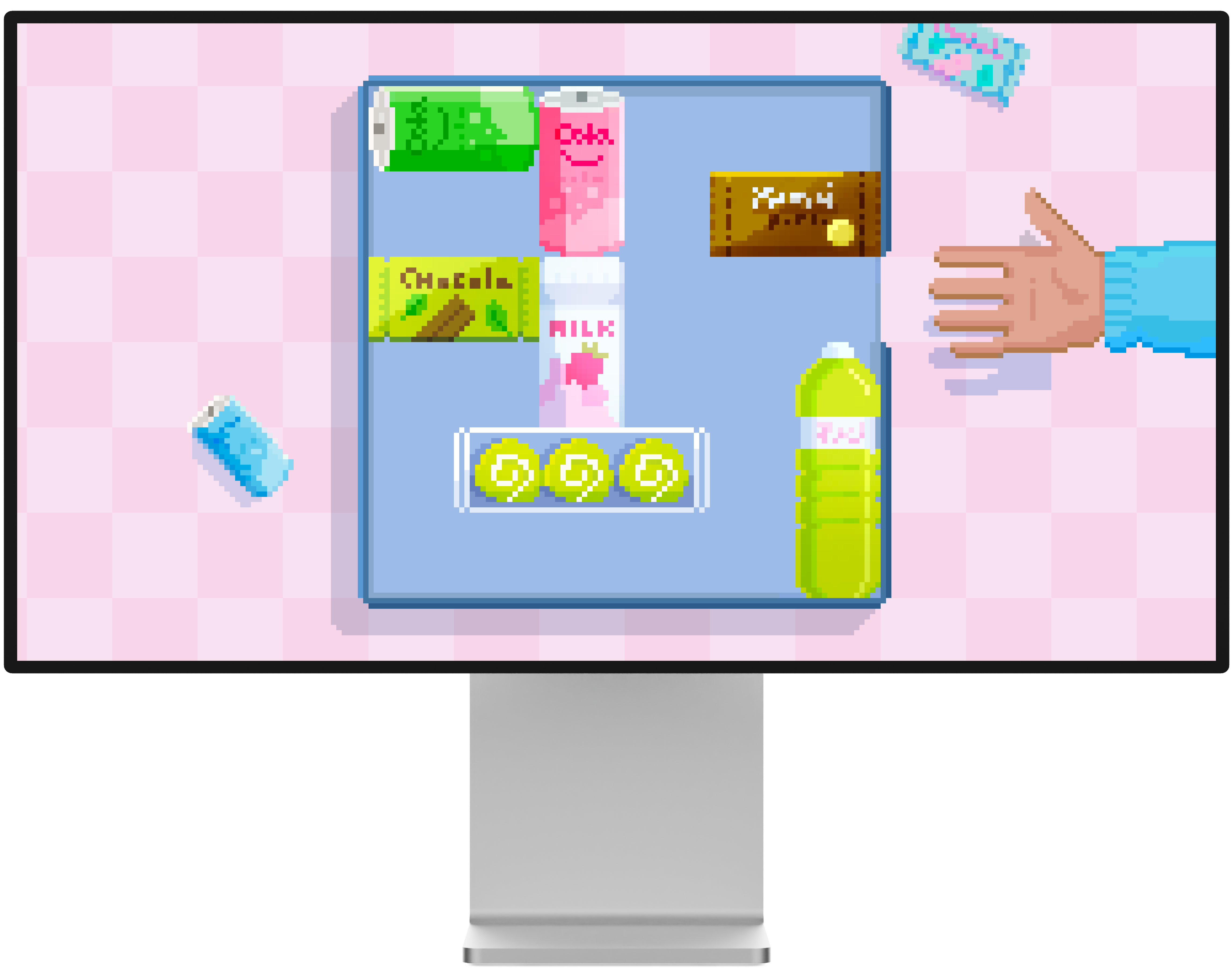
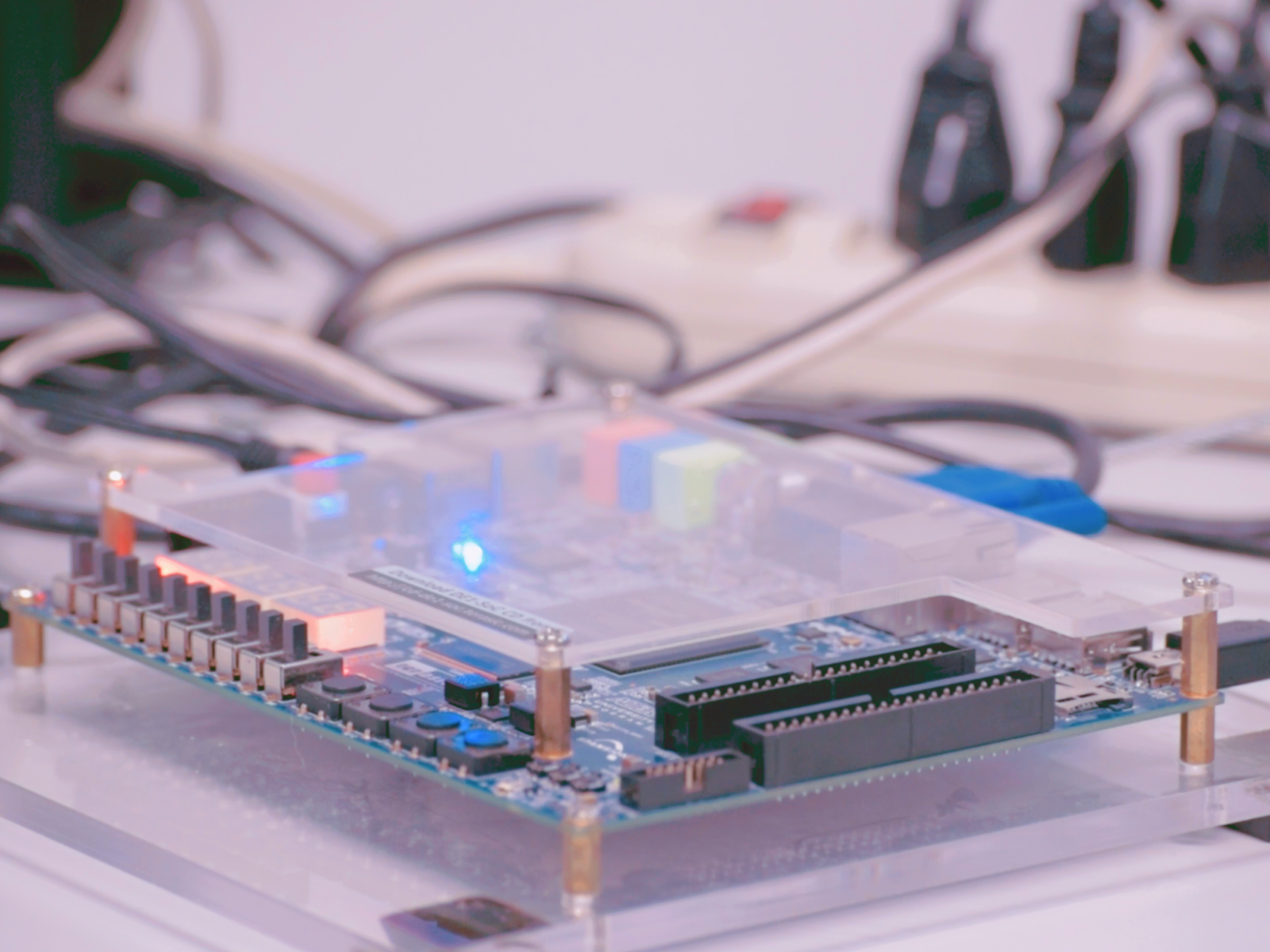
Snacktime Slider is a puzzle game set inside a vending machine. The player must get the desired snack to the user of the vending machine by moving the other snacks out of the way. Each snack is positioned either horizontally or vertically and its movement is restricted to its row or column. In other words, vertical snacks can only be moved up or down, and horizontal snacks can only be moved left or right. The player can select which snack to move using the switches on the FPGA board, and can then move the snack using two of the buttons on the board.

In this partner project, a big challenge was scalability. Due to the time constraints of the project, only one level was designed as a proof of concept. However, we wanted our implementation to be able to easily handle new levels without having to design a new FSM and Datapath for each one.
The way we did this was basing the game logic on a simple 6x6 array representation of the gameboard. Each snack occupies 2 or 3 spots and has a unique ID. Blank spots are represented as 0. When players move the snacks, this simple array is first updated accordingly. Then, a separate module reads the 6x6 array and outputs a 16 x 16 px sprite corresponding to each ID to the VGA.
This level of abstraction meant we didn't need to worry about the complexity of the sprites when designing an initial setup for a level, or when updating the gameboard with the player's movements. Additionally, it meant a new level of the same difficulty could easily be implemented by simply switching the 6 x 6 array to a different one that represents the initial setup of a new level. The difficulty can be increased by using a larger initial array such as a 7x7 or 8x8 array, although that would require a few more adjustments to add more snacks and and their corresponding IDs.
A shortcoming of the current version of this project is that the controls are not provided on the screen, and my partner and I would just explain them verbally to the players. If this game were to be released to a larger audience, it would be paramount to add such instructions, as well as a numbering on the snacks to indicate which ID each one corresponds to.
Overall, this project was a valuable experience for learning the methods and challenges in designing FPGA architecture, and working with the various constraints one might encounter in hardware design.
Back to Top
TAGS
Verilog
Quartus Prime
DE1-SoC
ModelSim
Finite State Machine
Datapath
VGA
2025 © Nusaiba Rakhshan